

Roy Orbison
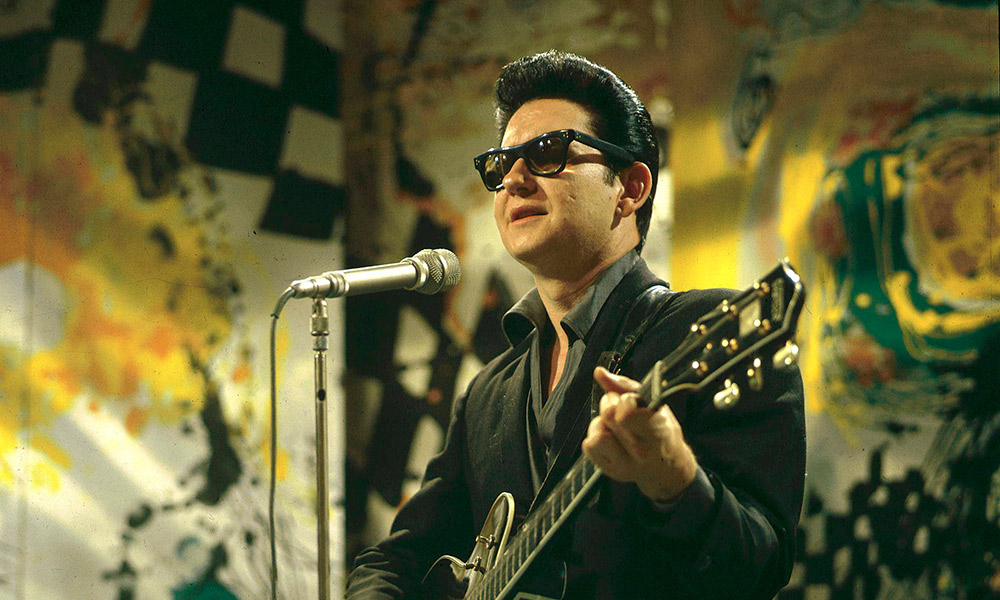
Roy Orbison had his first UK No.1 single in 1960, with “Only The Lonely” which was the first of 33 UK hits. The song was turned down by The Everly Brothers and Elvis Presley so Orbison decided to record it himself.
Roy had teamed up with songwriter Joe Melson who had recently quit his band The Cavaliers. The pair went on to write a string of hits for Monument Records including: “Running Scared,” “Crying,” “Blue Bayou,” and “Only The Lonely,” which became Orbison’s first major hit.
I find it funny to think that various budding English rock musicians were in awe of Orbison, and before they became famous would buy his singles, listening, learning and attempting to copy his singing and writing skills. I am, of course, talking about The Beatles, who at this time were playing the endless sets in Liverpool and Hamburg, Germany, but would later meet their hero, tour with him and Harrison would end up working alongside Roy in the Traveling Wilburys where Roy was known as ‘Lefty Wilbury’ and Harrison ‘Nelson Wilbury’.
Roy Orbison was born in Vernon, Texas, the middle son of Orbie Lee Orbison, an oil well driller and car mechanic. On his sixth birthday, Orbison’s father gave him a guitar. He became a fan of Hank Williams, Jimmie Rodgers and country singer, guitarist Lefty Frizzell (who Roy named himself after in the Wilburys).
In high school, Orbison and some friends formed The Wink Westerners (what a brilliant name), a band that played country standards and Glenn Miller songs. When they were offered $400 to play at a dance, Orbison realised that he could make a living in music.
Later, after hearing about a new rising star by the name of Elvis Presley, Orbison drove 355 miles to Dallas to see the on-stage antics of Presley. Orbison also got to meet Johnny Cash when he toured in 1955, playing on the same local radio show as Roy, who suggested that Orbison approach Sam Phillips at Sun Records. Roy Orbison and the Teen Kings signed to Sun in 1956, and their first release “Ooby Dooby” became a chart hit, but the follow-up singles failed.
Then in 1958, Roy’s luck changed. He was offered a spot on an Everly Brothers show in Hammond, Indiana. It turned out The Everlys needed a song for their new single and asked Roy if he had anything. He sang his new composition “Claudette” and they asked him to write the words down. So he did, on the top of a shoebox. The Everlys’ “Claudette” was released in late March 1958 as the B-side of “All I Have To Do Is Dream.”
Soon Roy’s songs had been recorded by Buddy Holly, Jerry Lee Lewis, Rick Nelson and Johnny Cash. Orbison had a knack for writing a great pop song.
Now signed to Fred Foster’s Monument label, Roy was up and running as a solo artist. “Only the Lonely” peaked at No.2 on the Billboard Charts and became No.1 in the UK. “Only the Lonely” became the first song that truly probed the frightening potential of Roy Orbison’s voice, and established his uniqueness.
And then he gave us “Oh Pretty Woman” which became his biggest hit. Few songs have boasted such a memorable guitar riff; the song sold about seven million copies in 1964 alone. Roy was now a true star; he toured with The Beatles in the UK, The Rolling Stones and toured with The Beach Boys in Australia.
Sadly during the mid-’60s, Roy suffered two major personal tragedies: Roy and his wife Claudette shared a love for motorcycles; however, tragedy struck on June 6, 1966, when Orbison and Claudette were riding home from Bristol, Tennessee.
Claudette was struck by a semi-trailer truck and died instantly. Two years later, on Sept. 14, 1968, tragedy struck again when, horrifically, two of his three sons lost their lives in a house fire. Roy Dwayne Orbison was ten years old; his brother, Anthony, was just six. Unable to write songs in the wake of such crushing loss, Orbison nonetheless continued to tour, seeking solace in music and in the support of fans.
The last two years of Orbison’s life were among his most productive. In 1987, he began collaborating with Electric Light Orchestra frontman Jeff Lynne on a new album. At the same time, Lynne was completing production work on George Harrison’s album Cloud Nine, and all three had lunch one day when Orbison accepted an invitation to sing on Harrison’s album. They contacted Bob Dylan, who allowed them to use a recording studio in his home. Along the way, Harrison had to stop by Tom Petty’s house to pick up his guitar; Petty and his band had backed Dylan on his last tour. By that evening, the group had written “Handle with Care,” which led to the concept of recording an entire album. They called themselves the Traveling Wilburys, representing themselves as half-brothers from the same father.
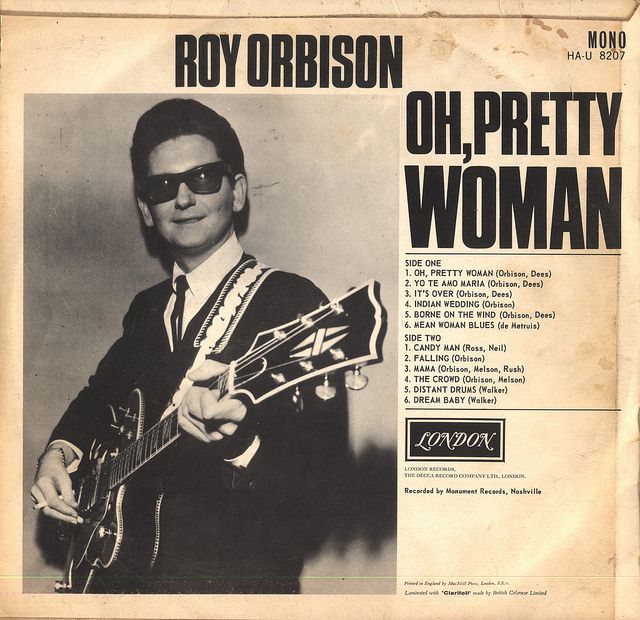
Now that’s the way to form a band!
The Wilburys gave Roy a new lease on life and he took on a heavy workload during the following year. After performances in Germany, the UK and the US Orbison became ill and died of a heart attack. He was just 52 years old, but his spirit seemed far older and wiser than his chronological age. Roy appeared older than he actually was.
Roy wasn’t a rock ‘n’ roller, and he wasn’t a cheesy pop artist, he was ‘The Big O’. He had the biggest voice and sang like nobody else. He wrote some of the best classic pop songs and was known for his motionless performances. Roy didn’t dance or move when he sang. He didn’t have to.
I’ll let this other singer have the last word on Roy:
“In 1975, when I went into the studio to record Born to Run, I wanted to make a record with words like Bob Dylan, that sounded like Phil Spector’s production, but most of all, I wanted to sing like Roy Orbison. Now, everybody knows that nobody sings like Roy Orbison” Bruce Springsteen
Important Dates In The Life Of Roy Orbison:
|
16
Feb
2026
American songwriter Billy Steinberg died from cancer at the age of 75. He achieved his greatest success in the 1980s with songwriting partner Tom Kelly; together they wrote or co-wrote the No. 1 hits 'Like a Virgin' by Madonna (1984), 'True Colors' by Cyndi Lauper (1986), 'Eternal Flame' by The Bangles (1989), 'So Emotional' by Whitney Houston (1987), and 'Alone' (covered by Heart in 1987). They also wrote or co-wrote the hit songs 'I Drove All Night' (recorded by various artists, initially recorded by Roy Orbison in 1987 but first released by Cyndi Lauper in 1989), 'I Touch Myself' by Divinyls (1990), and 'I'll Stand by You' by The Pretenders (1994).
|
|
6
Mar
2025
American singer, songwriter, and guitarist Troy Seals died at the age of 86. He was a member of the prominent Seals family of pop musicians that includes Jim Seals (of Seals and Crofts) and Dan Seals (of England Dan & John Ford Coley). His songs have been recorded by artists such as Joe Cocker, Eric Clapton, Elvis Presley, Roy Orbison and Charlie Rich.
|
|
9
Feb
2024
American rock and roll drummer, singer and record producer Jimmy Van Eaton died in Alabama at the age of 86. He is best known for his recordings as the drummer in sessions with Jerry Lee Lewis (such as 'Whole Lotta Shakin' Goin' On'), and others, including Johnny Cash, Roy Orbison and Charlie Rich at Sun Records in the 1950s.
|
|
22
Sep
2021
American session musician, orchestra leader, and double bassist Bob Moore died age 88. He was a member of the Nashville A-Team during the 1950s and 1960s and performed on over 17,000 documented recording sessions, backing acts such as Elvis Presley, Patsy Cline, Bob Dylan and Roy Orbison.
|
|
1
Mar
2019
Country Music Hall of Fame member Fred Foster died age 87. He is credited as producer behind all of Roy Orbison’s biggest hits including ‘Oh, Pretty Woman’, ‘Only the Lonely’, and ‘Crying’ and also produced major hits for Dolly Parton, Willie Nelson, Ray Stevens and Kris Kristofferson.
|
|
31
Jan
2019
Harold Bradley the American country and pop guitarist died age 93. As a session musician into the 1970s, he performed on hundreds of albums by country stars such as Patsy Cline, Willie Nelson, Roy Orbison, Elvis Presley and Slim Whitman. Bradley, who was inducted into the Country Music Hall of Fame in 2006, is believed to be one of the most recorded instrumentalists in history.
|
|
11
Jan
2017
Rockabilly guitarist Tommy Allsup, who narrowly avoided boarding the plane that killed Buddy Holly and the Big Bopper, died aged 85. The musician famously lost a coin toss for a seat on the plane. His place was taken by teen star Ritchie Valens, who also perished when the plane crashed. Allsup went on to become a Grammy-winning musician, who played with Merle Haggard, Roy Orbison and Willie Nelson.
|
|
28
Nov
2016
New Zealand born Ray Columbus, singer and songwriter, television host, music manager and entertainer died aged 74. He was the lead singer of Ray Columbus & the Invaders, who scored the 1964 hit was 'She's A Mod', a No.1 hit in Australia, the first song from a New Zealand group to reach the top of the charts in another country. During the 60s, Columbus toured with The Rolling Stones, Roy Orbison and The Newbeats.
|
|
21
Aug
2008
Drummer Buddy Harman died of congestive heart failure, aged 79. Worked with Elvis Presley (‘Little Sister’), Patsy Cline (‘Crazy’), Roy Orbison (‘Pretty Woman’), Johnny Cash (‘Ring Of Fire’), Tammy Wynette (‘Stand By Your Man’). Harman was the first house drummer for The Grand Ole Opry and can be heard on over 18,000 recordings.
|
|
28
May
2008
American guitarist Jerry Cole died aged 68. He first entered the pop music scene as one of The Champs along with Glen Campbell. Cole and Campbell later formed the Gee Cee's and released one single called 'Buzzsaw Twist'. He backed up Elvis Presley in 1974 and also worked with Jerry Lee Lewis, Roy Orbison, Aretha Franklin, The Righteous Brothers, Little Richard, Ray Charles, Tony Orlando & Dawn, Lou Rawls, Gregg Allman, Lee Hazlewood, Blood Sweat & Tears, Kenny Rogers, Neil Diamond, Steely Dan, The Beach Boys and Isaac Hayes.
|
|
17
Jun
2007
The Traveling Wilburys went to No.1 on the UK album chart with Collection. The line up of the Wilburys was: George Harrison (Nelson Wilbury), Jeff Lynne (Otis Wilbury), Roy Orbison (Lefty Wilbury), Tom Petty (Charlie T. Wilbury Jr.) and Bob Dylan (Lucky Wilbury).
|
|
30
Jul
2003
Sam Phillips the founder of Sun Records and studio died of respiratory failure at St. Francis Hospital in Memphis, Tennessee. In the 1940s, Phillips worked as a DJ for Muscle Shoals, Alabama radio station WLAY. Phillips recorded what some consider to be the first rock and roll record, ‘Rocket 88’ by Jackie Brenston and his Delta Cats in 1951. He discovered Elvis Presley, worked with Carl Perkins, Johnny Cash, Roy Orbison, Ike Turner, B.B. King and Jerry Lee Lewis.
|
|
22
Apr
2003
Songwriter Felice Bryant died of cancer. Wrote many hits with her husband Boudleaux including; The Everly Brothers, 'Bye Bye Love', 'All I Have To Do Is Dream', 'Wake Up Little Susie' and 'Raining In My Heart' a hit for Buddy Holly. Other acts to record their song include Bob Dylan, The Beatles, Tony Bennett, Simon And Garfunkel, Sarah Vaughan, Grateful Dead, Dolly Parton, Elvis Presley, The Beach Boys, Roy Orbison, Elvis Costello, Count Basie, Dean Martin, Ruth Brown, Cher, R.E.M. and Ray Charles.
|
|
23
Feb
2003
Howie Epstein bassist with Tom Petty and the Heartbreakers died of a suspected drug overdose in New Mexico. He had replaced The Heartbreakers original bassist Ron Blair, Epstein also worked with Bob Dylan, Johnny Cash, Stevie Nicks, Roy Orbison, Carl Perkins, Linda Ronstadt and Del Shannon.
|
|
3
Dec
2001
American session guitarist Grady Martin died aged 72. He was a member of the legendary Nashville A-Team, playing guitar on hits ranging from Roy Orbison's ‘Oh, Pretty Woman’, Marty Robbins' ‘El Paso’ and Loretta Lynn's ‘Coal Miner's Daughter’. During a 50-year career, Martin backed such names as Elvis Presley, Buddy Holly,
Woody Guthrie, Arlo Guthrie, Johnny Cash, Patsy Cline, Joan Baez and J. J. Cale.
|
|
8
Feb
1990
Suffering from depression American singer songwriter Del Shannon died of self inflicted gunshot wounds. He scored the 1961 UK and US No.1 single 'Runaway', plus nine US and 12 other UK Top 40 singles. In 1963, he became the first American to record a cover version of a song by the Beatles: his version of ‘From Me to You’ charted in the US before The Beatles' version. Shannon had been working with Tom Petty and Jeff Lynne and was rumoured to be replacing Roy Orbison who had recently died, in the Traveling Wilburys supergroup.
|
|
6
Dec
1988
American singer songwriter Roy Orbison died of a heart attack aged 52. Scored the 1964 UK & US No.1 single 'Pretty Woman', plus over 20 US & 30 UK Top 40 singles including ‘Only the Lonely’ and ‘Crying’. Formed his first band The Wink Westerners in 1949, was a member of The Traveling Wilburys (known as Lefty Wilbury) with Bob Dylan, George Harrison, Jeff Lynne and Tom Petty and had the 1988 UK No.21 single 'Handle With Care'. Orbison endured a great deal of tragedy in his life. His first wife, Claudette died in a motorcycle accident in 1966 and two of his three sons, died in a house fire.
|
|
4
Dec
1988
Roy Orbison played his final ever gig when he appeared in Cleveland, Ohio. Orbison died of a heart attack two days later.
|
|
23
Apr
1988
Roy Orbison celebrated his 52nd birthday at a Bruce Springsteen concert where Springsteen invited him onstage for a "Happy Birthday" sing-along. Orbison died of a heart attack in December of this year at the age of 52.
|
|
25
Jun
1987
Songwriter Boudleaux Bryant died. Wrote with his wife Felice, The Everly Brothers hits, 'Bye Bye Love', 'All I Have To Do Is Dream', 'Wake Up Little Susie' and 'Raining In My Heart' a hit for Buddy Holly. Other acts to record their song include Bob Dylan, The Beatles, Simon And Garfunkel, Grateful Dead, Dolly Parton, Elvis Presley, The Beach Boys, Roy Orbison, Dean Martin, Ruth Brown, Cher, R.E.M. and Ray Charles.
|
|
5
Jul
1982
Sun records musical director Bill Justis died of cancer aged 55. He worked with Sam Phillips at Sun Records, worked with also worked with Johnny Cash, Elvis Presley, Roy Orbison, Charlie Rich and Jerry Lee Lewis. Had the 1957 US No. 2 single 'Raunchy' (the first Rock and Roll instrumental hit). Also had a No.1 hit in Australia in 1963 with ‘Tamoure.’
|
|
19
Jul
1981
It was Roy Orbison Day in Odessa, Texas. Orbison was given the keys to the city, and performed for the crowd, the first time in Odessa in 15 years.
|
|
22
Jun
1980
Don McLean had his second UK No.1 single with the Roy Orbison song 'Crying'. The song had been a No.2 US hit for Orbison in July 1961. In 1987, Orbison re-recorded the song as a duet with k.d. lang as part of the soundtrack for the motion picture, Hiding Out. Their collaboration won the Grammy Award.
|
|
22
Aug
1976
The Beach Boys were at No.1 on the UK album chart with 20 Golden Greats. Record companies in the mid-70's were seeing great success with 'Greatest Hits' compilations. The Beach Boys spent 10 weeks at the top of the charts with 20 Golden Greats, Glen Campbell's Twenty Golden Greats spent 6 weeks at the top, and other 'hits' albums that peaked at No.1 in 76' included Bert Weedon, ABBA, The Stylistics, Slim Whitman, Roy Orbison and Perry Como. During the year, these compilations spent a total of 36 weeks at the top of the charts.
|
|
14
Sep
1968
Roy Orbison's house in Nashville burnt down, his two eldest sons both died in the blaze. Orbison was on tour in the UK at the time of the accident.
|
|
3
Mar
1967
The Jeff Beck Group, with an unknown vocalist named Rod Stewart, made their live performance debut in London at the Finsbury Park Astoria supporting the Small Faces and Roy Orbison. The night was a disaster for the Jeff Beck Group due to a power failure, which Rod Stewart swears to this day was instigated by Small Faces keyboardist Ian McLagan who was fearful the Jeff Beck group would steal the show! A furious Jeff Beck stormed off the stage and immediately sacked Rod Coons the drummer and announced that he was pulling the group out of the tour.
|
|
6
Jun
1966
Roy Orbison's first wife, Claudette, was killed when a truck pulled out of a side road and collided with the motorbike that she and her husband were riding on in Gallatin, Texas, she was 25.
|
|
1
May
1966
The Beatles played live for the last time in the UK when they appeared at the NME Poll Winners concert at Wembley Empire Pool. The Beatles set included; 'I Feel Fine', 'Nowhere Man', 'Day Tripper', 'If I Needed Someone' and 'I'm Down'. Also on the bill, The Spencer Davis Group, The Fortunes, Herman's Hermits, Roy Orbison, The Rolling Stones, The Seekers, The Small Faces, Dusty Springfield, The Walker Brothers, The Who and The Yardbirds.
|
|
27
Mar
1966
During an UK tour, Roy Orbison fell off a motorbike while scrambling at Hawkstone Park, Birmingham fracturing his foot. He played the remaining dates sat on a stool and walking on crutches.
|
|
21
Jan
1965
Over 3,000 screaming fans met The Rolling Stones and Roy Orbison at Sydney Airport when they arrived for a 16 date tour of Australia and New Zealand.
|
|
8
Oct
1964
Roy Orbison was at No.1 on the UK singles chart with 'Oh Pretty Woman', his third UK No.1. The title was inspired by Orbison's wife Claudette interrupting a conversation to announce she was going out; when Orbison asked if she was okay for cash, his co-writer Bill Dees interjected "A pretty woman never needs any money."
|
|
26
Sep
1964
Roy Orbison started a three week run at No.1 on the US singles chart with 'Oh Pretty Woman'. The title was inspired by Orbison's wife Claudette interrupting a conversation to announce she was going out; when Orbison asked if she was okay for cash, his co-writer Bill Dees interjected "A pretty woman never needs any money."
|
|
29
Aug
1964
Roy Orbison's 'Oh, Pretty Woman' was released in the US. It went on to reach No.1 four weeks later. The title was inspired by Orbison's wife Claudette interrupting a conversation to announce she was going out; when Orbison asked if she was okay for cash, his co-writer Bill Dees interjected "A pretty woman never needs any money."
|
|
25
Jun
1964
Roy Orbison was at No.1 on the UK singles chart with 'It's Over', his second UK No.1. Orbison was the first American artist to score a UK No.1 in the past 47 weeks.
|
|
9
Jun
1963
The Beatles on the last night of their tour with Roy Orbison, performed at King George's Hall, Blackburn, Lancashire. It was during this tour that The Beatles' fans started throwing jelly babies at them while they were on stage, after an off-the-cuff remark on television that George Harrison enjoyed eating them.
|
|
8
Mar
1962
The Beatles made their radio debut on the BBC's 'Teenagers Turn', (Here We Go), singing Roy Orbison's 'Dream Baby'. It was reportedly the first time The Beatles wore suits onstage.
|
|
5
Jun
1961
Roy Orbison went to No.1 on the US chart with 'Running Scared', it made No.9 in the UK. The B-side 'Love Hurts' also picked up significant airplay, making Orbison's recording the first version to be a hit.
|
|
20
Oct
1960
Roy Orbison had his first UK No.1 single with 'Only The Lonely' and his first of 33 hits. The song was turned down by The Everly Brothers and Elvis Presley so Orbison decided to record the song himself.
|
|
28
Jul
1960
Roy Orbison entered the UK chart with 'Only The Lonely', which went on to give Roy his first of three UK chart toppers. As an operatic rock ballad, it was a sound unheard of at the time, and is seen as a seminal event in the evolution of Rock and Roll. Released as a 45rpm single by Monument Records in May, 1960, 'Only The Lonely' went to No. 2 on the United States. The song was turned down by The Everly Brothers and Elvis Presley, so Orbison decided to record the song himself.
|
|
25
Jul
1960
Roy Orbison reached No.2 on the US singles chart with ‘Only the Lonely,’ his first hit. The song was turned down by The Everly Brothers and Elvis Presley, so Orbison decided to record the song himself.
|
|
16
Mar
1943
American keyboardist, record producer, David Briggs. He was one of an elite core of Nashville studio musicians known as "the Nashville Cats". He worked with many artists, including, Elvis Presley, Dean Martin, Joan Baez, Nancy Sinatra, B.B. King, Johnny Cash, Dolly Parton, Waylon Jennings, George Harrison, Todd Rundgren, Roy Orbison, Monkees, J. J. Cale, Kris Kristofferson and Alice Cooper. Briggs died of renal cancer in Nashville, on 22 April 2025, at the age of 82.
|
 This Day In Music (Official)
365 days of music history

Cass Elliot spent a night in jail on Oct. 07, 1967 #CassElliot #ThisDayInMusic
The Carpenters topped the US chart with a classic on Jul. 25, 1970 🎶 #Carpenters #ThisDayInMusic
Robert Palmer topped the charts with Addicted to Love on May 3, 1986 #RobertPalmer #ThisDayInMusic
The Big Bopper, Buddy Holly & Ritchie Valens Rocked Surf Ballroom 🎸 Feb. 02, 1959 #ThisDayInMusic
The Rolling Stones music celebrated at UCLA 🎶 Jan. 04, 1968 #ThisDayInMusic
Karen Carpenter shines at final live show with The Carpenters on Dec. 17, 1982 🌟 #ThisDayInMusic
The Rolling Stones rock billionaire's birthday bash 🎸 Nov. 16, 2002 #ThisDayInMusic
On Nov. 2, 1969, Creedence Clearwater Revival dropped the iconic 'Willy and the Poor Boys' album!

Arnas
August 26, 2020 at 2:46 pm
What a life…
Btw, check out this fabulous sketch portrait of Roy!
https://www.skillmill.co/showroom/derek-bacon-visual-arts-the-big-o-1597318709644