Where There’s A Hit – There’s A Writ
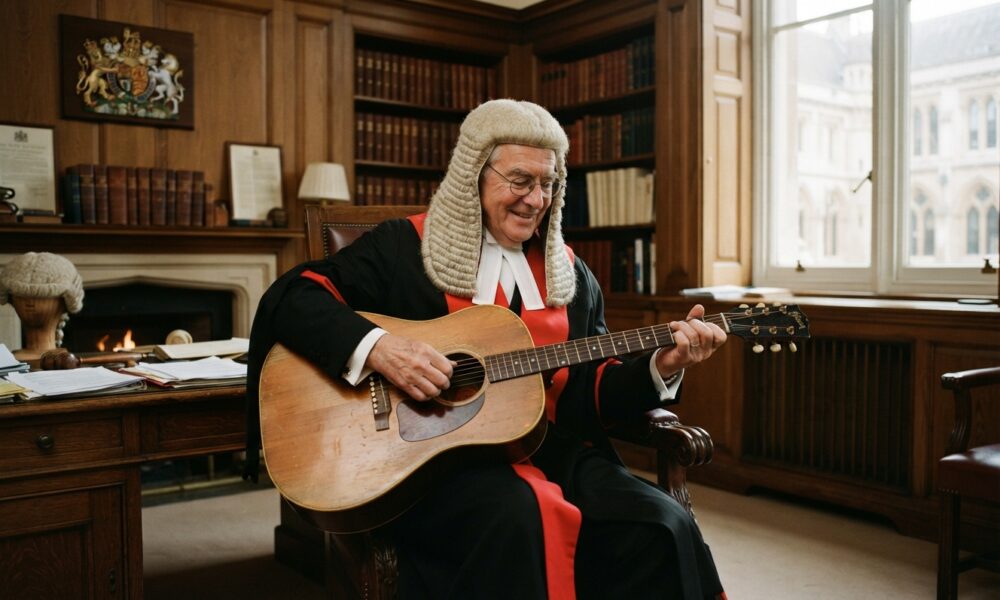
There’s an old music industry adage: “where there’s a hit, there’s a writ”. When the Beach Boys released “Surfin’ USA”, Chuck Berry spotted that the tune was the same as his own 1958 hit “Sweet Little Sixteen”: but with different words; so the publishers went to court. The outcome was Berry being listed alongside Brian Wilson as a writer of the song.
Over the years, some artists have alleged that their work was plagiarised and released by others, while others have merely shrugged their shoulders and seen the close similarities as a form of flattery. The advent of the latest technology, digital downloading and software-generated music, has thrown an extra curveball into the equation. Plagiarism and copyright infringement “are related, but they are distinctly different”, says Peter Oxendale, who has been a professional forensic musicologist for more than 40 years.
Ob-La-Di, Ob-La-Da – Life goes on, brah
Paul McCartney wrote the song when reggae was becoming popular in Britain. The character of Desmond from the opening line “Desmond has a barrow in the market-place” was a reference to reggae singer Desmond Dekker, who had recently toured the UK. The tag line “Ob-la-di, ob-la-da, life goes on, brah” was an expression used by Nigerian conga player Jimmy Scott-Emuakpor, an acquaintance of McCartney. After the release of “Ob-La-Di, Ob-La-Da” in November 1968, Scott tried to claim a writer’s credit for the use of his catchphrase. McCartney said that the phrase was “just an expression”, whereas Scott argued that it was not a common expression and was used exclusively by the Scott-Emuakpor family. Later in 1969, while in Brixton Prison awaiting trial for failing to pay maintenance to his ex-wife, Scott sent a request to the Beatles asking them to pay his legal bills. McCartney agreed to pay the amount on the condition that Scott abandon his attempt to receive a co-writer’s credit.
Every Breath You Take – I’ll Be Missing You
“I’ll Be Missing You” by Puff Daddy and American singer Faith Evans topped many charts across the world. It reached number one in the United States, the United Kingdom and Australia, as well as over 15 other countries. The song is based on a slightly slowed-down sample of the 1983 single “Every Breath You Take” by the Police. It also uses an interpolation of the “Every Breath You Take” melody, sung by Biggie’s widow, Faith Evans. Combs did not secure legal approval for the sample before releasing the song, and Police songwriter Sting sued, receiving 100% of the song royalties (with some reports estimating $2,000 per day going to Sting!)
Taurus – Stairway to Heaven
The estate of Randy California, who died in 1997, filed a copyright infringement suit in 2014 seeking a co-writing credit for California on “Stairway to Heaven.” In April 2016, California Central District Court Judge Gary Klausner ruled that there were sufficient similarities between the songs to call for Jimmy Page and Robert Plant, credited as co-writers of “Stairway to Heaven”, to stand trial by jury for copyright infringement. The trial began on June 14, 2016, and Jimmy Page spent hours on the witness stand testifying. By law, the jury was not allowed to hear original recordings of the songs; instead, they heard an expert perform both songs in court using original sheet music. The trial concluded on June 23, 2016, with the jury, after one hour of deliberation, finding that Led Zeppelin was not guilty of copyright infringement, determining that while Plant and Page had access to “Taurus”, the song’s riff was not “intrinsically similar” to the opening of “Stairway to Heaven.”
I Won’t Back Down – Stay With Me
A dispute involving Tom Petty centers on his 1989 song “I Won’t Back Down” (co-written with Jeff Lynne) and Sam Smith’s 2014 hit “Stay With Me,” which ended in a royalty settlement rather than a formal lawsuit. Publishers noted melodic similarities between the chorus of Smith’s “Stay With Me” and the verse melody of Petty and Lynne’s “I Won’t Back Down”. An out-of-court settlement was reached in late 2014 and Petty and Lynne were added as co-writers and each received 12.5% of the song’s royalties. Petty stated he had no hard feelings, never intended to sue, and called the overlap “a musical accident”.
He’s So Fine – My Sweet Lord
“He’s So Fine”, written by Ronnie Mack, was recorded by The Chiffons, who topped the Billboard Hot 100 for four weeks in the spring of 1963. One of the most instantly recognisable golden oldies with its doo-wop background vocals, “He’s So Fine” is also renowned as the song in the famous plagiarism case against George Harrison‘s “My Sweet Lord“. In 1971, Bright Tunes Music Corporation filed suit alleging that Harrison had plagiarised “He’s So Fine” in his then-current hit, “My Sweet Lord”. The case did not go to trial until February 1976, after which the judge ruled in favour of Bright Tunes on the liability portion of the suit, determining that Harrison had committed “subconscious” plagiarism. The final decision was that Harrison would purchase Bright Tunes for $587,000, and although litigation continued for at least ten more years, that decision was upheld. In 1975, the Chiffons recorded a version of “My Sweet Lord”, attempting to capitalise on the publicity generated by the lawsuit. In 1976, Harrison released “This Song” in reaction to the plagiarism suit.
Blurred Lines – Got to Give It Up
Marvin Gaye‘s estate won a copyright infringement case against Robin Thicke and Pharrell Williams over “Blurred Lines,” which was found to copy elements of Gaye’s 1977 song “Got to Give It Up”. Gaye’s family raised infringement claims in 2013, Thicke, Williams, and T.I. (Clifford Harris) filed for a declaratory judgment of non-infringement, and the Gaye family countersued. In 2015, a jury ruled for Gaye’s family, resulting in Thicke, Williams, and Williams’s publishing company being ordered to pay nearly $5 million total (including $2.8 million in joint damages plus separate payments) and to grant Gaye’s family 50% of future royalties from the song.
Bitter Sweet Symphony – The Last Time
The Verve developed “Bitter Sweet Symphony” from a sample of the 1965 Rolling Stones song “The Last Time” by the Andrew Oldham Orchestra, adding vocals, strings, guitar and percussion. After a lawsuit by the Stones’ former manager, Allen Klein, the Verve relinquished all royalties to Mick Jagger and Keith Richards, who were also added to the songwriting credits. In 2019, Billboard estimated that “Bitter Sweet Symphony” had generated almost $5 million in publishing revenue. In the same year, ten years after Klein’s death, Jagger, Richards, and Klein’s son ceded the rights to the Verve songwriter, Richard Ashcroft. Ashcroft later stated it was a “kind and magnanimous” move. I never had a personal beef with the Stones. They’ve always been the greatest rock and roll band in the world”.
Just Another Night
In 1998, Mick Jagger appeared in White Plains, New York, Federal Court in the copyright infringement case brought by reggae singer Patrick Alley, who claimed the Jagger solo track “Just Another Night” was a plagiarism of his own song of the same name. Alley was claiming $7m in profits from the track. During the case, Sly Dunbar played drums for the court to show how the beats were different in each song, and Jagger sang and played demos of his song to show the court the development of the track. At the end of the week-long trial, Jagger won the case.
Thinking Out Loud – Let’s Get It On
Ed Sheeran has faced several high-profile music copyright and plagiarism disputes, most notably winning a major court cases over “Thinking Out Loud” and “Shape of You”. Courts largely sided with Sheeran on disputed claims, ruling that common chord progressions and musical elements are not protectable copyright. Heirs of co-writer Ed Townsend and Structured Asset Sales sued Sheeran over similarities to Marvin Gaye‘s 1973 hit “Let’s Get It On”. A US federal jury ruled in Sheeran’s favour in 2023, and the US Supreme Court rejected Structured Asset Sales’ appeal in June 2025, ending the litigation. “Shape of You” vs. “Oh Why”: Songwriters Sami Chokri and Ross O’Donoghue accused Sheeran and his co-writers of copying the refrain of “Oh Why”. In April 2022, England’s High Court ruled Sheeran did not copy the song deliberately or subconsciously.
Mbube – The Lion Sleeps Tonight
The dispute over “The Lion Sleeps Tonight” centers on South African musician Solomon Linda, who composed and recorded the original song “Mbube” in 1939 for minimal pay and died in poverty. In 1962 while later adaptations—including its prominent use in Disney’s The Lion King—earned millions. In 2004, Linda’s descendants sued Disney and rights holders in South Africa, reaching a landmark settlement in 2006 that recognised Linda as a co-composer and secured royalties for his heirs. This entitled Linda’s heirs to past payments and future royalties, administered through a trust.
The Air That I Breathe – Creep
Radiohead reused the chord progression and melody of the British-Gibraltarian singer-songwriter Albert Hammond and the English songwriter Mike Hazlewood’s “The Air That I Breathe” (1974 No.2 hit for the Hollies) for their 1992 debut single “Creep”. After Rondor Music, took legal action, Hammond and Hazlewood received co-writing credits and a percentage of the royalties. Hammond said Radiohead were honest about having reused the song, and so he and Hazlewood accepted only a small part of the royalties.
 This Day In Music (Official)
365 days of music history

Cass Elliot spent a night in jail on Oct. 07, 1967 #CassElliot #ThisDayInMusic
The Carpenters topped the US chart with a classic on Jul. 25, 1970 🎶 #Carpenters #ThisDayInMusic
Robert Palmer topped the charts with Addicted to Love on May 3, 1986 #RobertPalmer #ThisDayInMusic
The Big Bopper, Buddy Holly & Ritchie Valens Rocked Surf Ballroom 🎸 Feb. 02, 1959 #ThisDayInMusic
The Rolling Stones music celebrated at UCLA 🎶 Jan. 04, 1968 #ThisDayInMusic
Karen Carpenter shines at final live show with The Carpenters on Dec. 17, 1982 🌟 #ThisDayInMusic
The Rolling Stones rock billionaire's birthday bash 🎸 Nov. 16, 2002 #ThisDayInMusic
On Nov. 2, 1969, Creedence Clearwater Revival dropped the iconic 'Willy and the Poor Boys' album!